
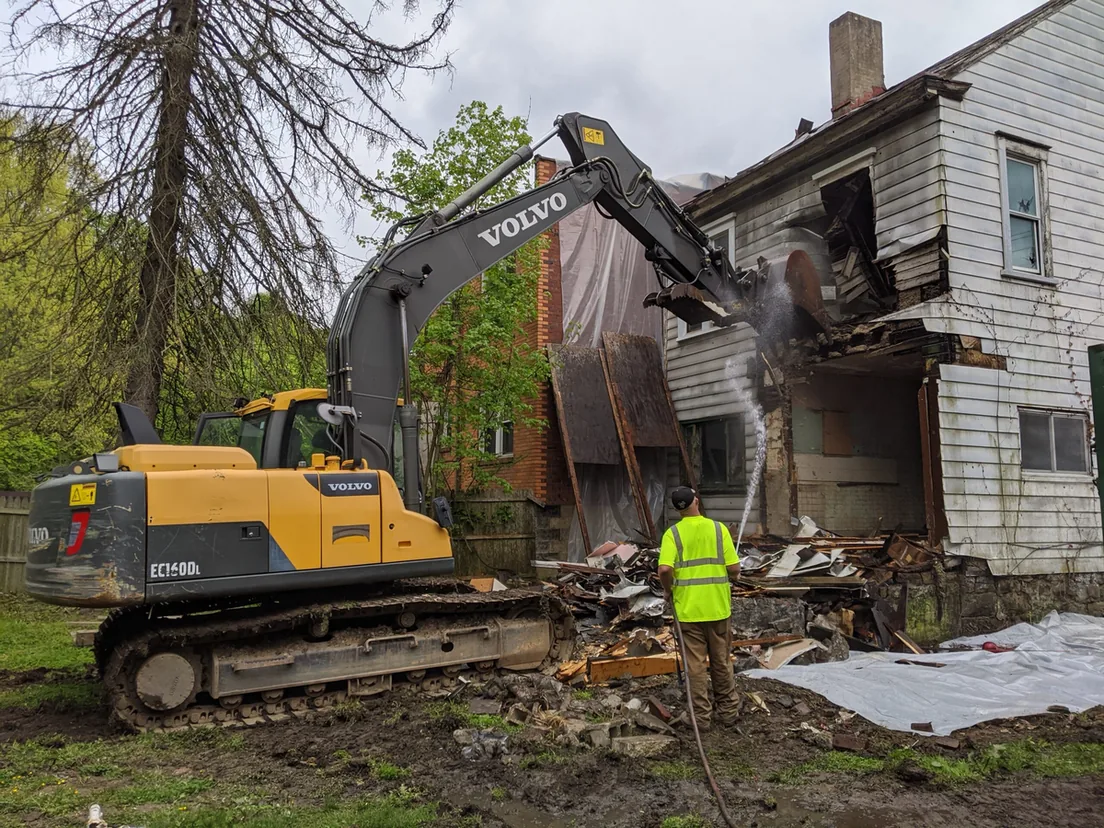
House Demolition
We take whole houses down to the ground across Weymouth and the South Shore. Garages and barns come down too, and we clear the debris off the site.
Learn More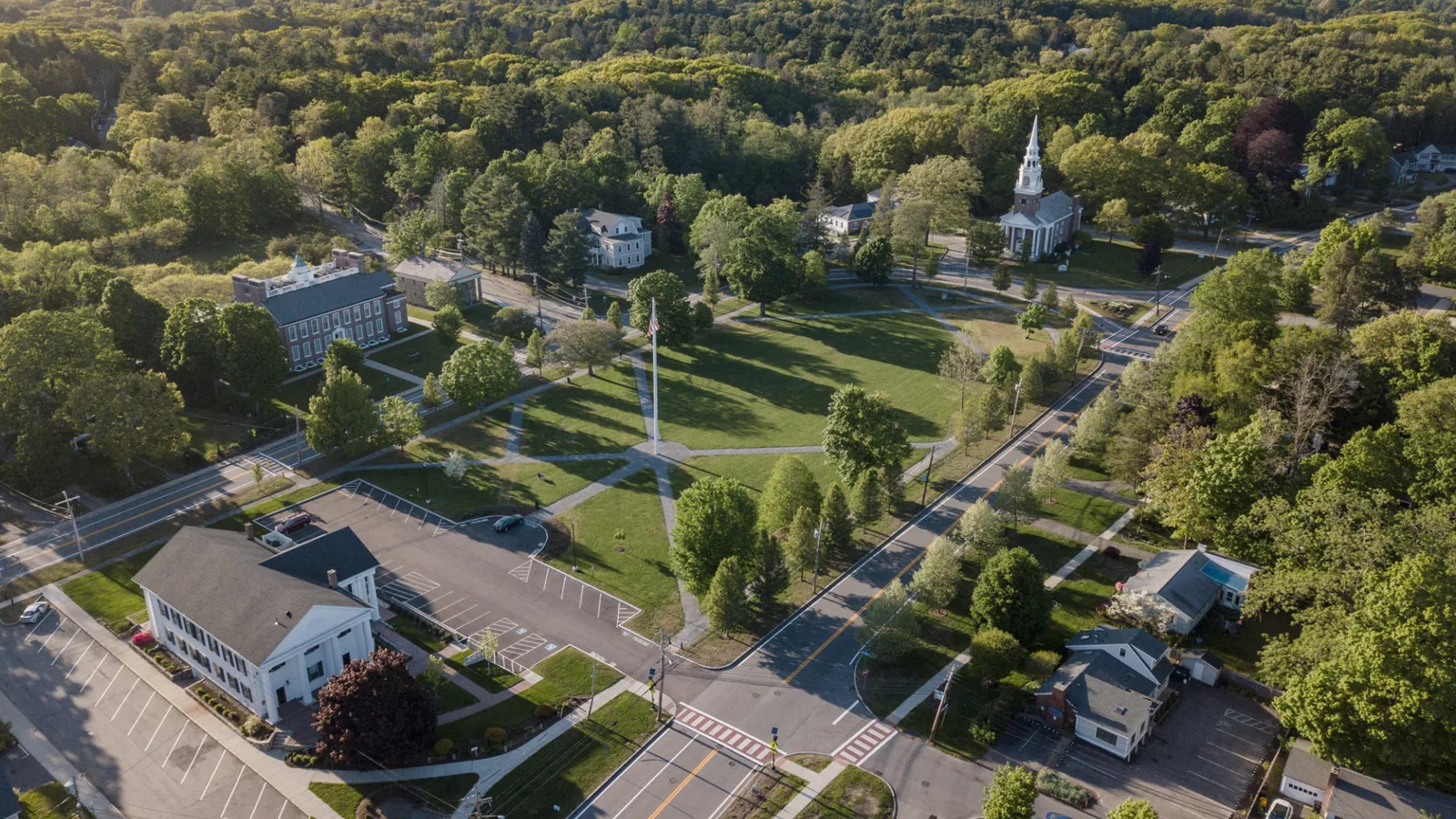
Most of Framingham's homes went up after World War II. Census estimates show more than half were built from 1950 through 1979. About one in six is older, built before 1940, and past the 80-year line in the city's demolition delay ordinance. Tearing one of those down starts with a review by the Historical Commission.
MJ Masonry is a demolition and masonry contractor, and Framingham is part of our service area. Here we take on house demolition and building demolition, and clearing the debris is part of the job. On the masonry side, we lay brick and concrete block (CMU) and pour the concrete that goes with them. Call or text (617) 838-0280, and we will look at the job and put the quote in writing.
Tell us about the demolition or masonry work and where it is. We look at the job and put the quote in writing.
Demolition permits in Framingham come from the Building Commissioner, through the city's Inspectional Services Division. Its Building Department works out of the Memorial Building, Framingham's City Hall. Since July 2025, the city has taken demolition permit applications online through its OpenGov portal.
The city's demolition permit packet covers homes and commercial buildings alike. It asks for a debris affidavit naming the facility that will take the debris. It also calls for disconnect or approval letters, where they apply, from each utility and the Board of Health. The form also has sign-off lines for the Fire Department and the Historical Commission.
Before that permit issues, the Public Health Department signs off on its own checklist. An asbestos survey comes first, and an asbestos abatement contractor removes any asbestos before demolition starts. A pest control company inspects for pests and rodents, and its last visit falls within two weeks before demolition. Any septic system is abandoned while a city health inspector watches.
Framingham's demolition delay ordinance covers any building 80 or more years old, in whole or in part. That is the line in the current city code, though some older city forms still say 75. Homes from the 1950s, almost a fifth of the city's housing, start reaching 80 in 2030.
The application goes to the Historical Commission with photos of each side and proof of the build date. The commission has 30 days to decide whether the building is significant. If it is, a public hearing follows within 30 more days, and the owners of adjoining property get notice.
A building the commission votes to preserve waits six months for its permit. One on the city's Cultural Resources Inventory can wait 12 months. The permit can come sooner if the commission advises that no one is willing to save the building. Tearing down a significant building without this review can block a new building permit on that land for two years.
Much of Framingham sits on sand and gravel left by Glacial Lake Sudbury, according to the city's open space plan. The same plan calls Merrimac fine sandy loam desirable for building. Along the Sudbury River, the meadows hold muck and peat with a high water table.
Bedrock outcrops show up across the city, with several large clusters in the northwest. The plan notes that building near outcrops can mean excavation or blasting. Northwest Framingham also relies on septic systems, and some homes there draw from wells.
Downtown, the plan flags a variable high water table as a challenge for new projects. Flood hazard areas follow the Sudbury River along its whole length in Framingham. Near the river and Sucker Brook, much of the Walnut Street neighborhood sits in mapped flood zones. Ledge and wet ground both shape the work and the price of footings and foundation walls.
South Framingham grew into the city's downtown after the railroad opened in 1834. In 2015, Town Meeting approved new zoning there to draw transit-oriented development near the commuter rail. The city's open space plan counts six major residential projects completed since, with 882 units in all. Just outside the district, a former shopping plaza now holds 210 homes.
Route 9 and the Mass Pike split the city into north and south. Rebuilding Route 9 as a four-lane highway in 1963 cut through Framingham Centre's 19th-century commercial center. Today the Golden Triangle of Route 9, Route 30 and Speen Street holds dense shopping and office centers.
Redevelopment on a built-up site starts with taking down what stands there. Our building demolition work covers whole-building knockdowns, with the debris cleared from the site. When new walls go up, our commercial masonry covers block buildings and elevator shafts for general contractors. Owners who keep a building and rework the inside start with interior demolition.
Communities and areas we serve around Framingham: Saxonville, Nobscot, Framingham Centre, Downtown Framingham, Dennison Triangle, Golden Triangle, Route 9 corridor, Salem End Road, Lake Cochituate, Farm Pond, Callahan State Park, Cushing Memorial Park.
Framingham ZIP codes served: 01701, 01702.
Framingham is part of our service area. We look at the job first, then put the quote in writing.
(617) 838-0280 We take whole houses down to the ground across Weymouth and the South Shore. Garages and barns come down too, and we clear the debris off the site.
Learn More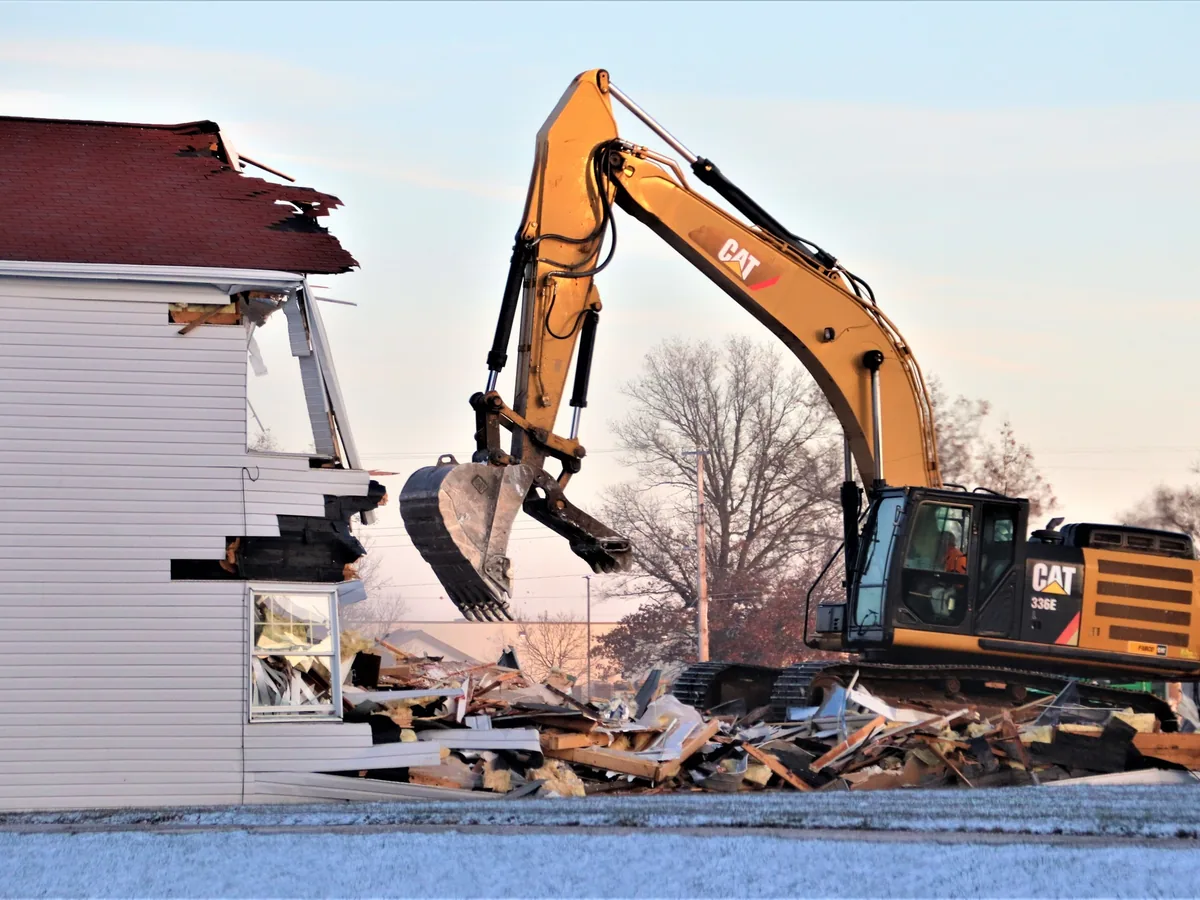
We knock down commercial and industrial buildings, warehouses and apartment buildings around Weymouth and Greater Boston. The debris leaves the site as part of the job.
Learn More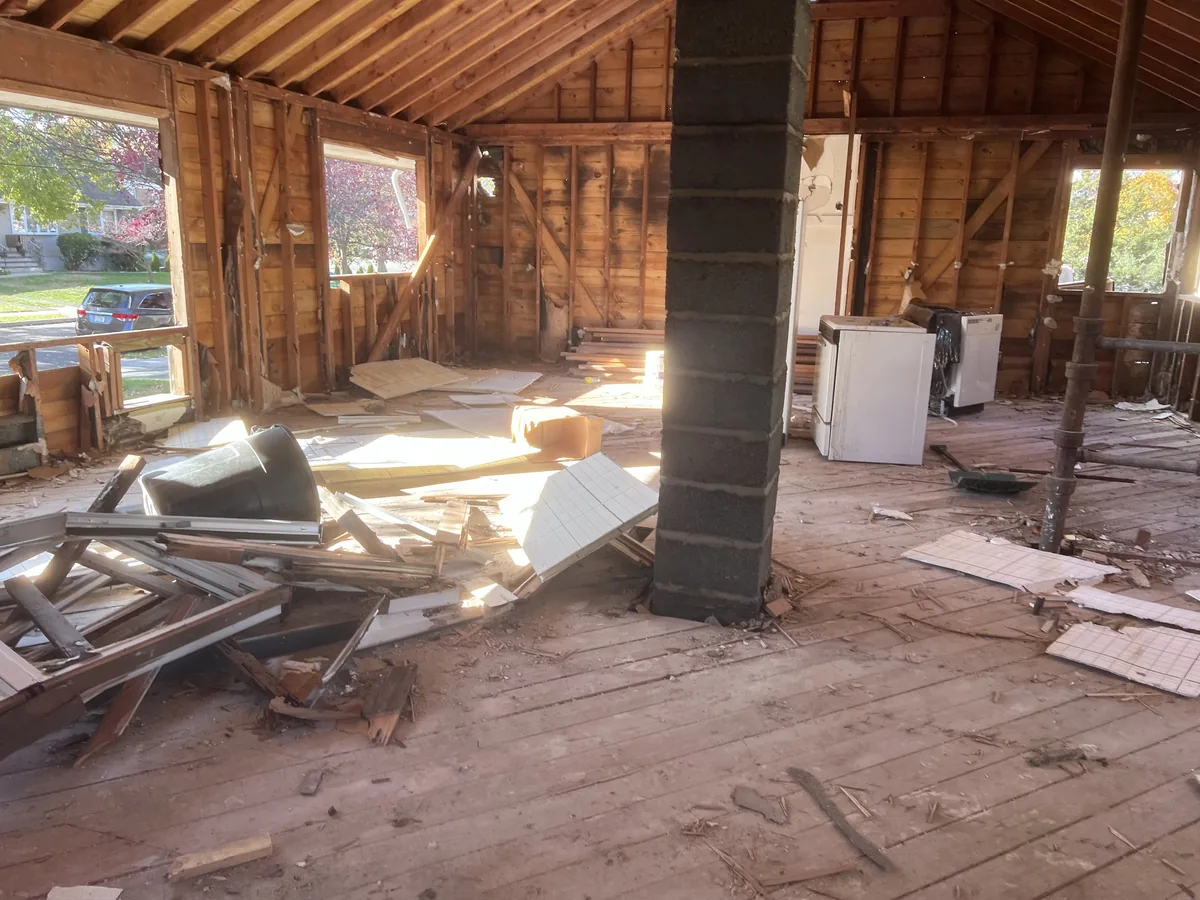
Interior demolition for houses and commercial spaces around Weymouth and Greater Boston. We handle gut-outs and selective demolition ahead of a renovation and carry the debris out.
Learn More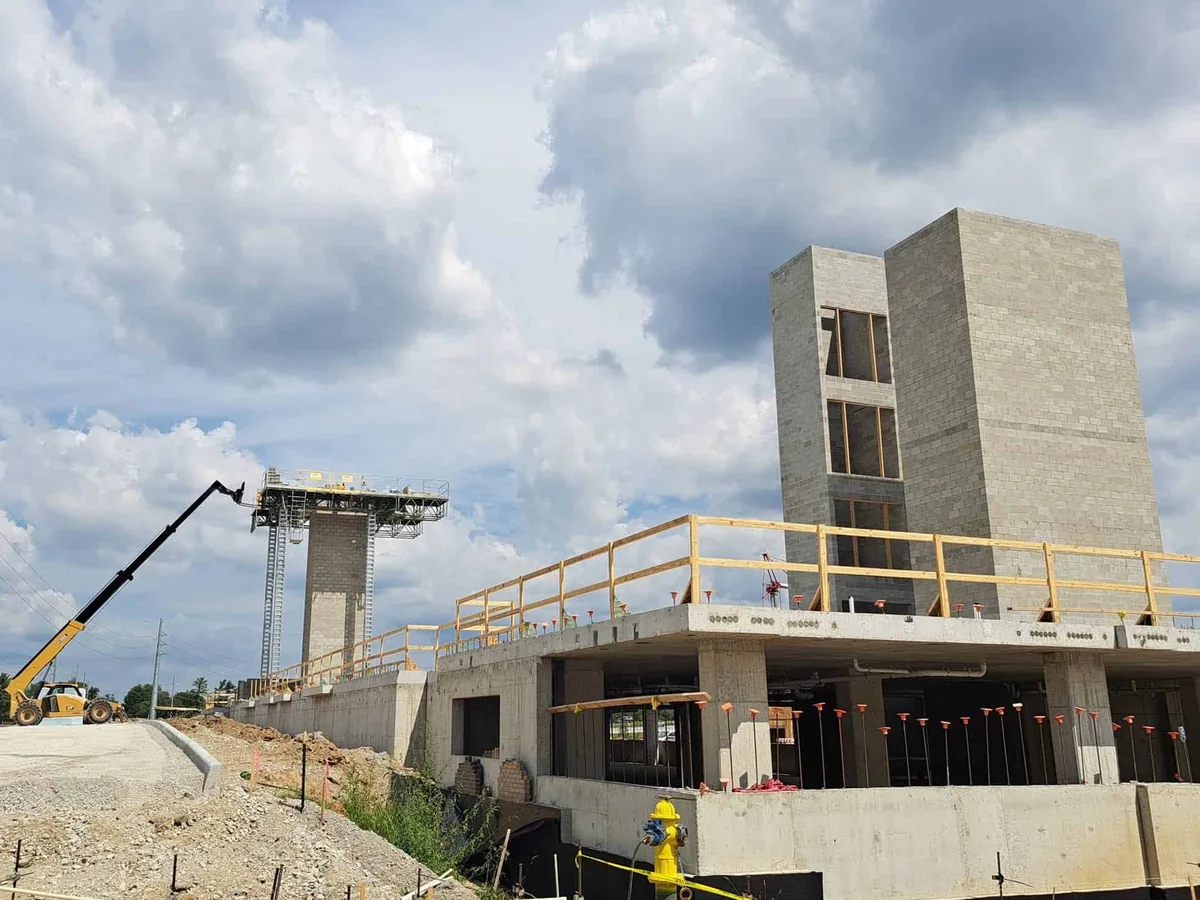
We lay concrete block (CMU) buildings and the elevator and stair shafts inside them. Brick and brick veneer go up on the same commercial jobs, priced in writing from the plans.
Learn More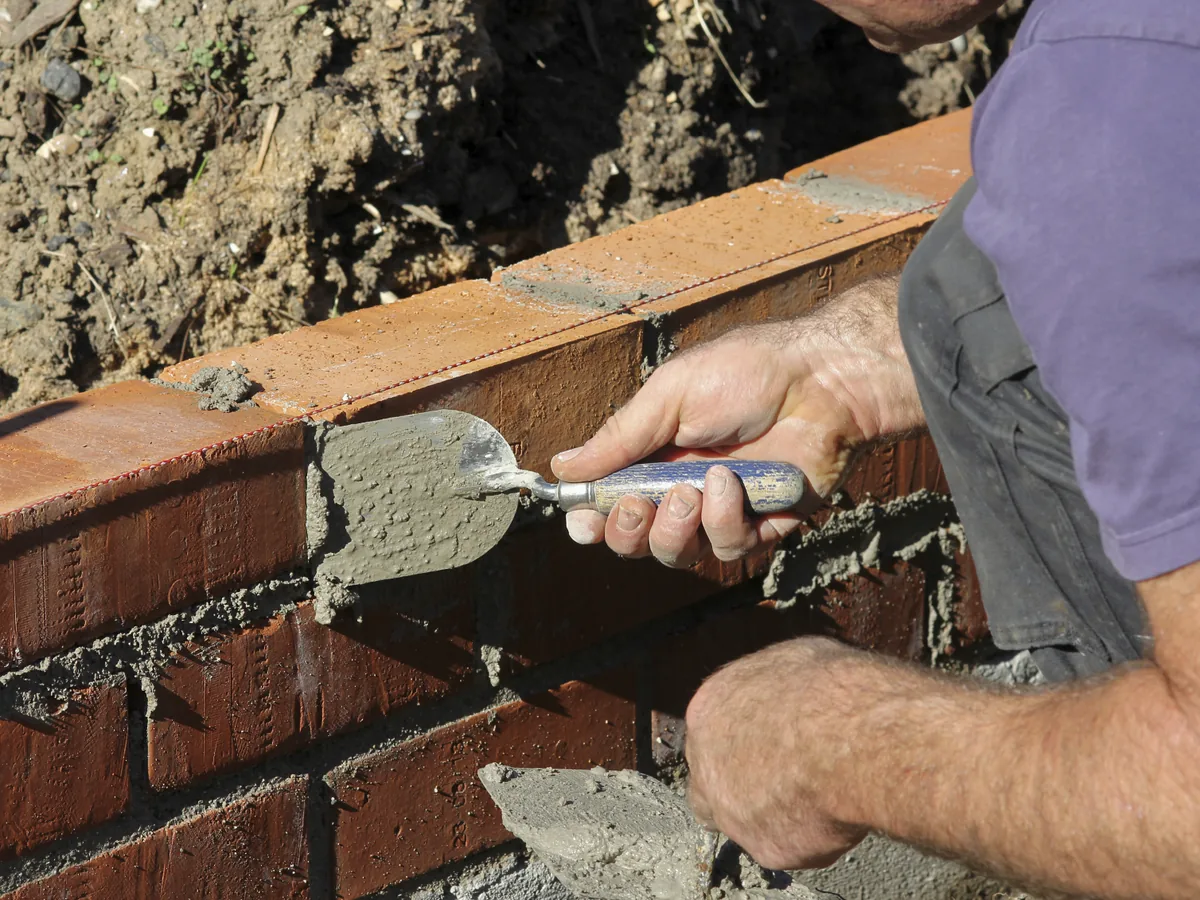
We lay new brick walls for homes and commercial buildings, both structural brick and brick on concrete block. Brick steps and landings come with the building work, and we put the quote in writing.
Learn More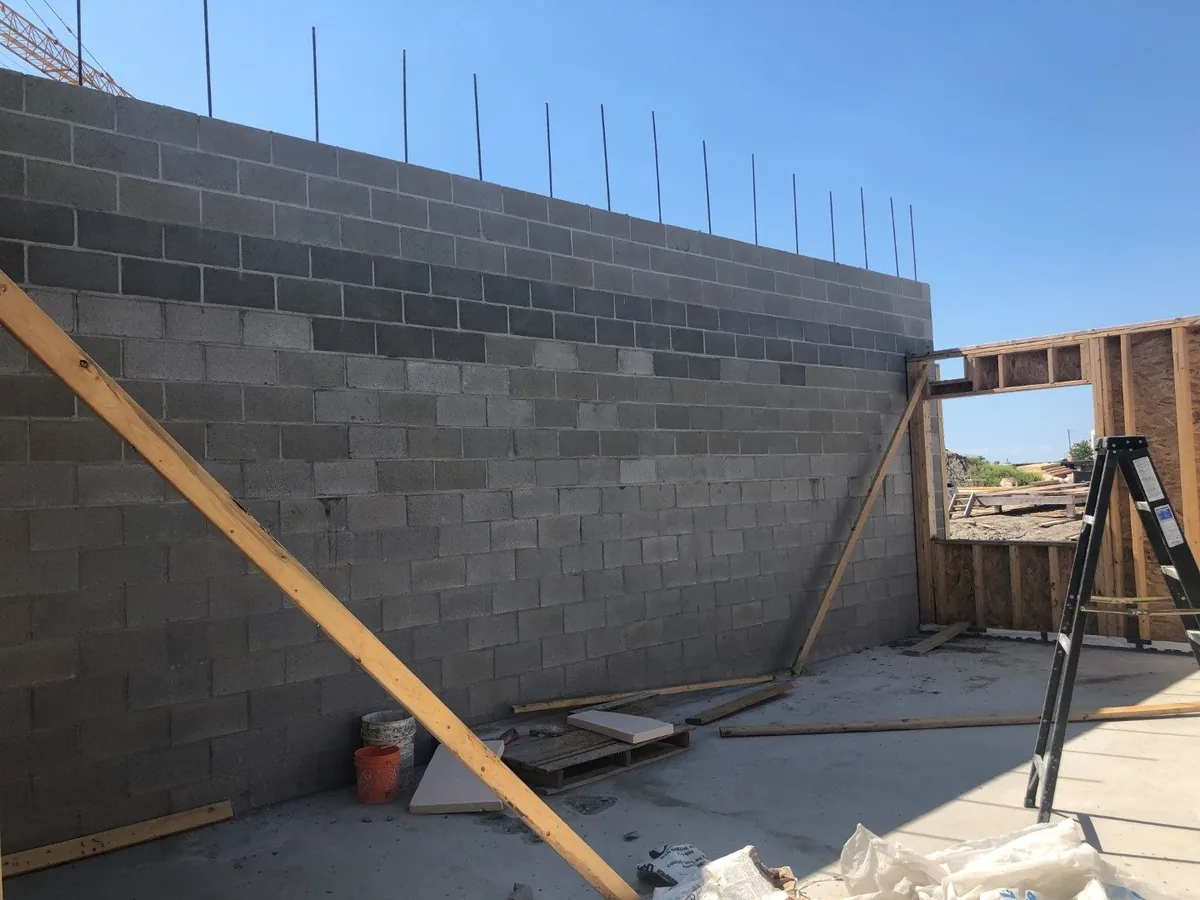
Concrete block (CMU) walls for commercial buildings and foundations, reinforced and grouted to the drawings. We pour the footings under the block walls we build, and we lay elevator and stair shafts in block.
Learn More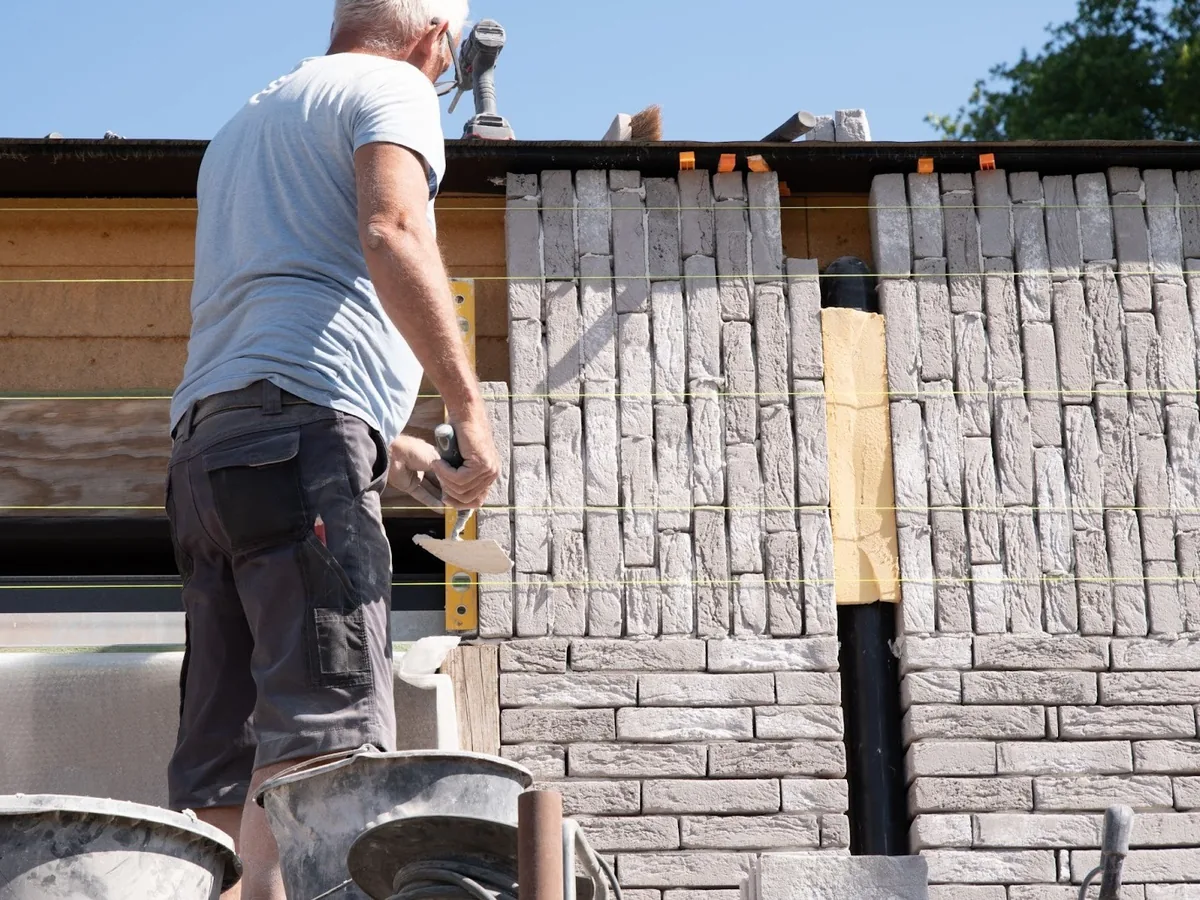
We lay brick veneer over wood-frame walls on homes and additions, and over concrete block (CMU) on commercial buildings. Metal ties hold it to the wall, and flashing and weep holes let water back out.
Learn More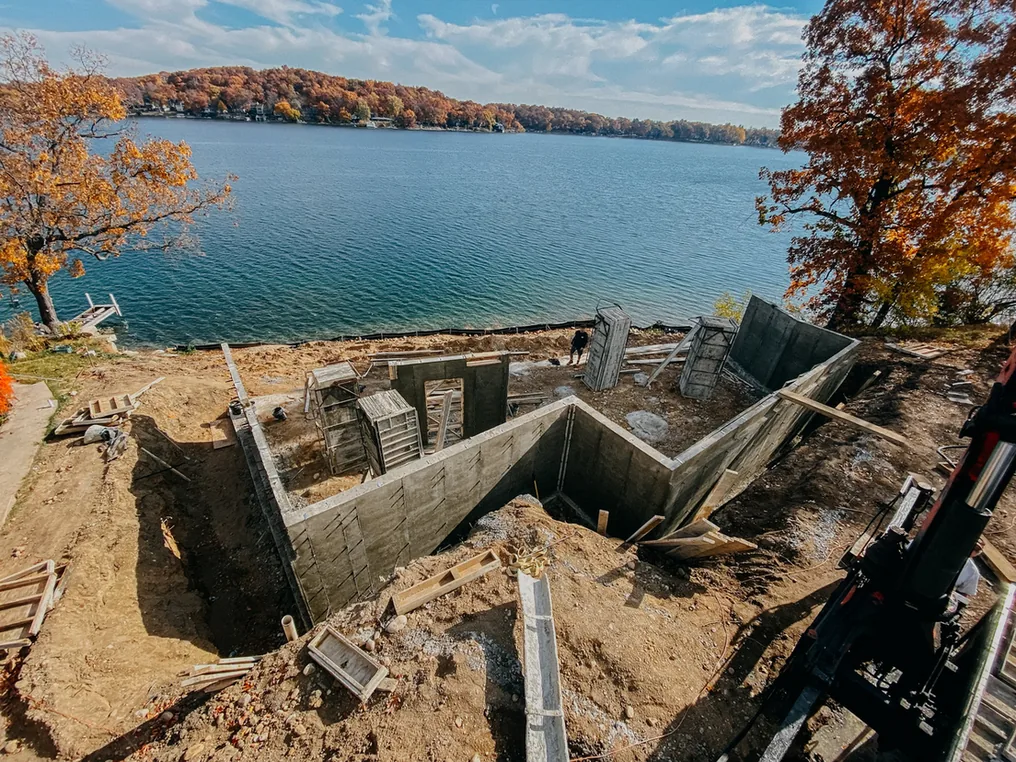
Footings, foundations, slabs, pads, steps and landings for homes and commercial buildings. We pour the concrete that goes with our masonry work.
Learn MoreA few of the questions we hear most around Framingham. If yours is not here, call or text and ask.
Use the form to tell us about the work and the town it is in. You can also call or text (617) 838-0280 and send photos or plans.
Tell us about the demolition or masonry work and where it is. We look at the job and put the quote in writing.